

Guide
How to Choose an Amish Sewing Cabinet
What should I compare before ordering an Amish sewing cabinet?
Choose the cabinet around your installed machine dimensions and weight, then compare the open and closed footprint, lift and insert fit, fabric support, storage, construction, delivery path, and custom options. Confirm every final measurement with the cabinet maker before a made-to-order cabinet enters production.
The best sewing cabinet starts with the machine and the room—not a finish color. Measure the machine as it will sit in the cabinet, then decide how much fabric support, storage, and closed-cabinet footprint your sewing routine needs.
Fit the cabinet to your machine and workflow
Include the spindle and cords when you measure. CCW recommends allowing room in the custom template and confirming the machine make and model before the cabinet is built. A standard cabinet may suit a typical machine, while larger embroidery and quilting machines can require a widened kneehole, a larger insert, or an extra-tall lift.
Compare work surface and storage, not just cabinet width
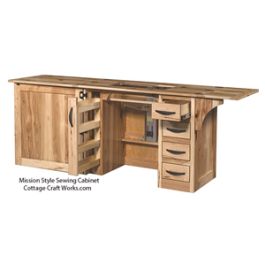
Look for support behind and beside the needle when handling quilts, plus the drawers, spool storage, serger space, or leaves you will actually use. A rear leaf helps keep long material from pulling, while casters can improve access in a shared room. Confirm the open and closed dimensions, delivery path, and whether the cabinet will need to double as furniture when closed.
Understand the construction choices
CCW’s Amish cabinets use solid hardwood on high-wear tops, fronts, doors, and drawer fronts, with cabinet-grade veneer plywood where stable panel construction is appropriate. Custom options such as wood species, door style, leaf, and machine modification should be finalized before the build begins.
Compare your options
Compact or shared-room cabinet
Prioritize a closed-cabinet size that works in the room, a lift that stores the machine below the top, and the few storage features you need every session.
Dedicated quilting or embroidery station
Prioritize larger machine clearance, a custom insert, a rear or side leaf, and a lift that fits the machine’s full height and weight.
Sewing and serger combination
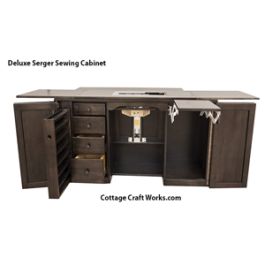
Look for a dedicated serger compartment or adjoining work area so both machines remain accessible without crowding the knee space.